
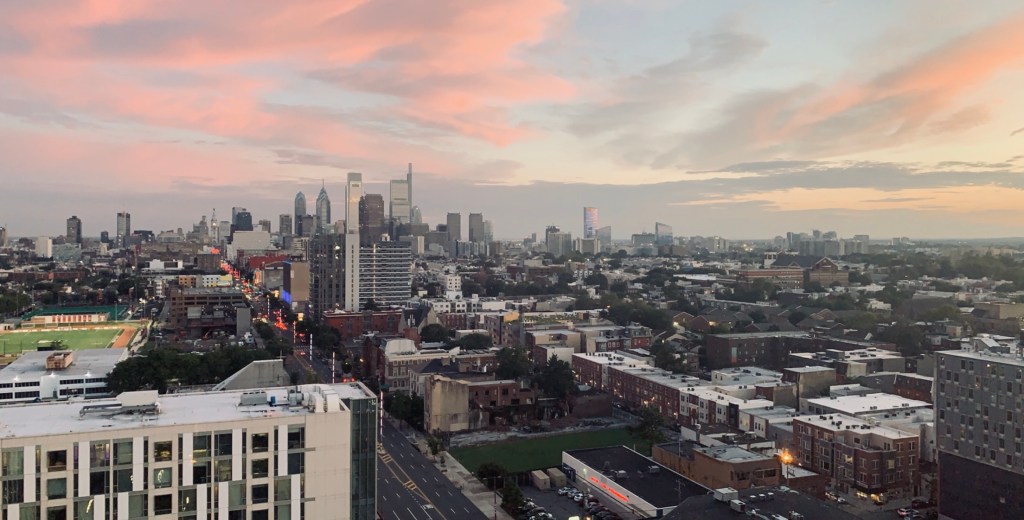
Covid-19, coronavirus, has struck fear in every living being’s mind and body. It has changed the way we live our day to day lives. Many are questioning how long will quarantine go on, how long will the fear exist, or how will this change the way we live from this point forward. When considering how we will live from this point forward, it is important to consider all that this pandemic has taught us. Specifically, I believe that attention should be drawn to the natural world.
I created a survey consisting of a single prompt; How will the coronavirus pandemic change the way we live going forward? Most people responded with thoughts regarding overall improvement of sanitation and cleanliness, and others responded thinking that nothing will change and things will slowly but surely go back to the way things were (with blame on President Trump) (Cavallero). I thought it was interesting that everyone failed to reference the environment, so I chose to move ahead with my own research.
Coronavirus has taken over our lives in every way shape and form possible, but luckily it also has brought attention to the air pollution dilemma. The link to covid-19 deaths and air pollution is loud and clear. “Studies of viral pandemics…found that residents of areas with more polluted air were far more likely to die. A team at Harvard made similar findings about covid-19, using data of death rates across the United States”(Karnad). Light being shed on this connection is hopefully raising awareness that air pollution is so much more than us not being able to see the stars. Many people do not know that according to the World Health Organization (WHO), air pollution is causing a hundred thousand deaths to children below the age of five in India each year. WHO estimates that conditions directly related to ambient air pollution kill about 4.2 million a year throughout the entire world (Karnad). The Harvard analysis of covid-19 and air pollution also found that “-if Manhattan had lowered its average particulate matter level by just a single unit, or one microgram per cubic meter, over the past 20 years, the borough would most likely have seen 248 fewer Covid-19 deaths by this point in the outbreak” (Friedman). It is crucial to consider how many lives could have been saved if we as a population worked harder to lower air pollution in the past. It is sad that it took a global pandemic to finally make the issue of air pollution as known as it now is, but now that the topic is on the table, the question is how do we lessen the air pollution? Lucky enough, the answers are right in front of us.
With most populations either actively choosing, or being forced to stay home almost all of the time, and less emitters of fossil fuels up and running, there has been a significant decrease in some of the most common air pollutants. The temporary benefit of this quarantine is the decrease of air pollution, as people all around the world are appalled at how clear the sky is. “A nationwide lockdown has given Indian cities the kiss of life—the sky is clearer, rivers are less contaminated, and people have awakened to possible change” (Karnad). Not only has the pandemic cleared the skies though, it also “likely saved the lives of 4,000 young children and 73,000 elderly adults in China over two months this year” (Koren). Obviously it would be absurd to consider this global pandemic a “blessing in disguise” for the environment’s sake, as we are dealing with a horrible disease killing almost two hundred thousand people, but perhaps it is opening our eyes to possibility. Climate change is real. Changing the course of climate change is too though. Rice states that, “These reductions in pollution just over one month could mean tens of thousands of deaths avoided from air pollution.” If we as a population are seeing immense amounts of change over just one month, imagine how life could be if the world were always actively trying to minimize air pollution.
Yes, the coronavirus has struck fear in all of our minds and bodies, but perhaps it has also opened our eyes. We are living in a world where change is possible, and sometimes it takes a global pandemic for it to take place. As much as I wish I could say the world will change after this is over, I do not think it will. People are protesting for businesses to open back up as they are too blind to see the problem at hand, Florida has opened back up their beaches, and without everyone fully understanding, I don’t think much will change. However, should things change for the better after this is all over, I hope people are able to see all the ways we pollute our air and the negative effects that come alongside it. It is possible that people will truly see the positive impacts of cutting down transport, and changing the ways that we are producing goods, and make change for the better. But we are living life in the unknown, so it is impossible to say as of right now.
Works Cited
Cavallero, Vincent. “Covid-19 Change.” Questionnaire, 20 Apr. 2020
Friedman, Lisa. “New Research Links Air Pollution to Higher Coronavirus Death Rates.” The New York Times, The New York Times, 7 Apr. 2020, http://www.nytimes.com/2020/04/07/climate/air-pollution-coronavirus-covid.html.
Karnad, Raghu. “The Coronavirus Offers a Radical New Vision for India’s Cities.” The New Yorker, 13 Apr. 2020, http://www.newyorker.com/news/dispatch/the-coronavirus-offers-a-radical-new-vision-for-indias-cities-pollution.
Koren, Marina. “The Pandemic Is Turning the Natural World Upside Down.” The Atlantic, Atlantic Media Company, 2 Apr. 2020, http://www.theatlantic.com/science/archive/2020/04/coronavirus-pandemic-earth-pollution-noise/609316/.
Rice, Doyle. “Could the Coronavirus Actually Be Saving Lives in Some Parts of the World Because of Reduced Pollution?” USA Today, Gannett Satellite Information Network, 17 Mar. 2020, http://www.usatoday.com/story/news/nation/2020/03/17/coronavirus-could-be-saving-lives-pollution-carbon-emissions/5066718002/.
 English 802 Spring 2020
I like how you not only researched the problem, but also a possible solution. It is nice to read about the positive things that have happened due to the virus. Even though it is still a terrible situation, it is nice to see even the slightest silver lining. I like the research you did; how you did your own survey as well as getting information from other sources. This was very informative.
-Madison
LikeLike
This was very well done, Vinnie. It was very well-informed and I love that you took this take on it. There has been far too much apathetic thinking about climate change. The people profiting from it has convinced the public that it’s too far gone, so what does any of it matter? But if you take one Sustainable Environments class or do some research, you quickly learn that the Earth is much quicker at healing than we think it is. Truly, if we did simple changes in industry and cultural ways of life, we could fix things QUICKLY. We need to realize that change is not some impossible thing in modern times. Together, humans can fix things. The problem is the government and the powerful people exploiting everything get in the way. Let’s see what hits its true breaking point and how the people can get through this, hopefully better on the other side.
LikeLike
I really like your perspective on this piece Vinnie. I think a lot of people bypass the environmental aspect of this whole pandemic and it really shouldn’t be brushed over. I myself am guilty of this but took time to reflect on it after seeing headlines saying that certain species would come back into certain environments. I would also see articles relating to the points you brought up like the sky being clearer in places where there is heavy air pollution. I hope humans can become better coming out of this pandemic and continue to focus on combatting air pollution.
LikeLike