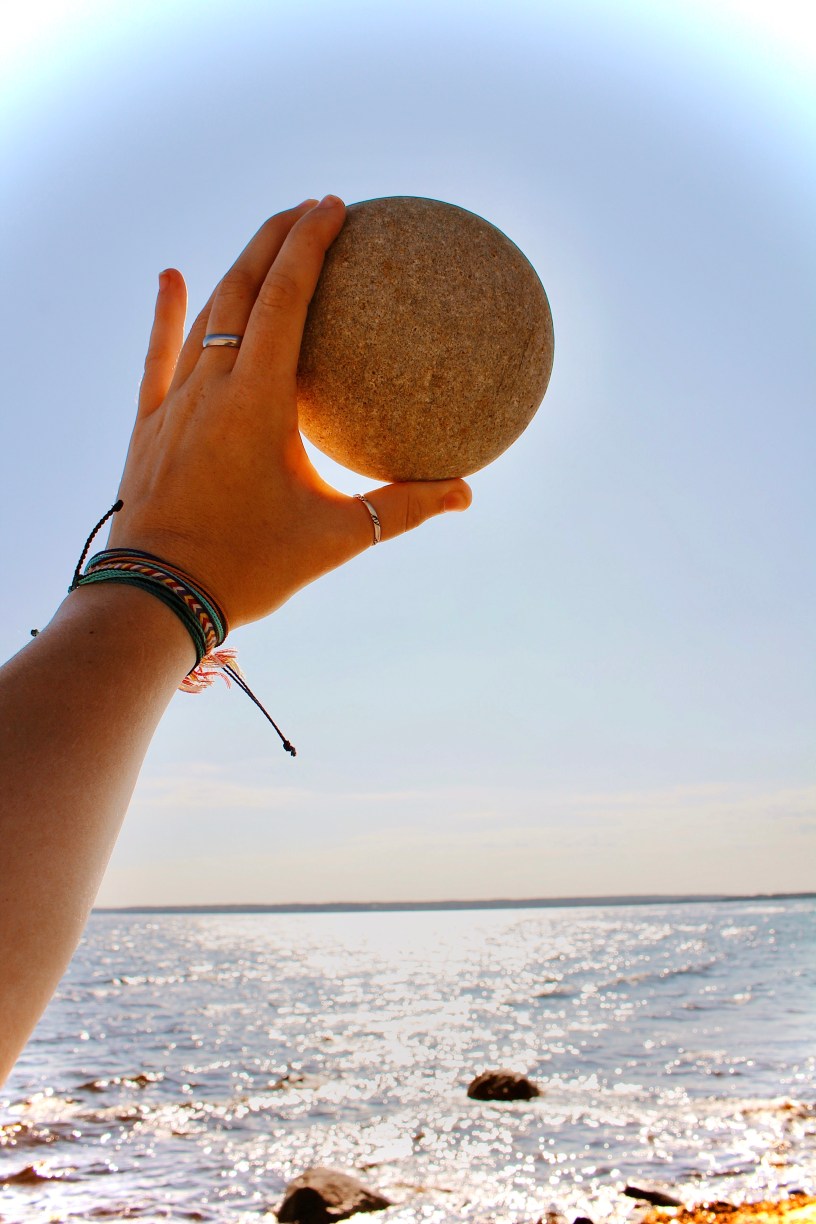
How should the coronavirus pandemic change the way we live going forward? For such a weighted question, it is hard to articulate my longwinded answer that is about to follow. I can only hope that our approach to living will change for the better once quarantine is over. I say this for the sake of the environment and our beautiful Earth. I also acknowledge that it is unrealistic to ask for the positive benefits, that have come from travel bans and social distancing, to not return to the way things were. As a compromise I hope that more people who are currently trapped in their homes take notice of the wonderful benefits this unexpected and unfortunate situation has had on our environment. The way in which people have blindly exploited the earth and its resources has continued for too long.
However inconvenient or uncomfortable, social distancing and quarantining has kept millions of people off the streets and thus out of their cars. Airlines have been shut down indefinitely and large events around the world have been postponed. All of these efforts to manage the pandemic has lead to a “decrease in nitrogen dioxide being released into the atmosphere” (Stoye, 2020). Changes we could make in our own lives would be to recycle, travel in more efficient ways, and emphasize the need for more environmentally conscious politicians. They vote on bills that could have critically beneficial effects on climate change. It would be nearly impossible to continue living our lives like this even after social distancing is lifted but in the grand scheme of things, the changes mentioned previously are small steps we can take to continue this positive trend or at the very least keep the environment from spiraling back to the way it was.
Scientists have risen questions as to why climate change is treated so drastically different than COVID-19 is currently being treated. They acknowledge that viruses are scary because of their immediate threat and aren’t negating from the seriousness of our current situation but it is important for us to be educated on how serious climate change is becoming. “Our health entirely depends on the climate and the other organisms we share the planet with” (“What Actions Can We Take to Prevent Future Outbreaks?”, 2020). Even if humans choose to continue acting for selfish purposes and want to look our for their own best interest, experts say “to prevent further outbreaks both global heating and the destruction of the natural world for farming, mining and housing have to end, as both drive wildlife into contact with people” (Carrington, 2020).
Not many people realize that diseases and climate change go hand in hand. With harmful acts such as deforestation we are only increasing our risk of exposure to wildlife and more potentially dangerous pandemics. We force animals out of their natural habitats and into areas where they are in close quarters with people and as a result, we harm all kinds of wildlife, the earth and ourselves. To put it in perspective, “at least 320,000 kinds of viruses are known to infect mammals alone and these diseases rarely stick with one species”(Kaplan, 2020). Think about all the pathogens that we could be exposed to that are worse than COVID-19, HIV, ebola, and the measles, which are all diseases that spread from animals.
As a species that claims to be superior to most others and takes pride in its accomplishments, one would think that we could manage to take better care of the planet we live on. In reality it shouldn’t take a global pandemic to realize the crucial part we play in the earth’s condition but if that’s what people need to open their eyes, then so be it. The coronavirus is scary and so is climate change. As we proceed into the future I hope that we learn to pay more attention to our actions and their consequences. If history is any indication we might not change, but with every disaster, natural or quarantine required pandemic, I can only hope for the sake of all life on earth more and more people start to care.
Works Cited
Carrington, Damian. “Coronavirus: ‘Nature Is Sending Us a Message’, Says UN Environment Chief.” The Guardian, Guardian News and Media, 25 Mar. 2020, http://www.theguardian.com/world/2020/mar/25/coronavirus-nature-is-sending-us-a-message-says-un-environment-chief.
Kaplan, Sarah. “Climate Change Affects Everything – Even the Coronavirus.” The Washington Post, WP Company, 15 Apr. 2020, http://www.washingtonpost.com/climate-solutions/2020/04/15/climate-change-affects-everything-even-coronavirus/?arc404=true.
Stoye, Emma. “The Pandemic in Pictures: How Coronavirus Is Changing the World.” Nature News, Nature Publishing Group, 7 Apr. 2020, http://www.nature.com/articles/d41586-020-01048-7.
“What Actions Can We Take to Prevent Future Outbreaks?” EHN, EHN, 4 Apr. 2020, http://www.ehn.org/coronavirus-environment-2645553060.html?rebelltitem=7#rebelltitem7.
 English 802 Spring 2020
Great piece. I am fascinated when looking at certain pictures. Clean canals in Venice. Pollution reduced so much, you can actually see the Himalayas from Indians towns hundreds of miles away. I feel even at home, that there is a noticeable decrease in air pollution. It may just be placebo, but I feel that the Philly skyline way off in the distance is far more clearly visible from my town.
The oil price war is something that also needs to be considered when talking about the effects COVID will have on the climate. This lockdown will end soon, and people will be driving again. If prices are still dirt cheap, this may increase the burning of fossil fuels. At the same time when oil prices drop through the floor, nobody invests in oil extraction, this may further help the environment. It is an interesting thing to think about.
LikeLike
I really like this piece, highlighting the environmental aspects of this pandemic has been something I’ve seen a lot more, through other classmates works and then just articles and headlines. On top of that, with Earth Day passing it gives me a second to appreciate what we have on this earth and try to not take it for granted. Looking at the positives has been something I’ve tried to do more of during these unprecedented times, so the positive benefits for the environment are definitely something nice to look at.
LikeLike